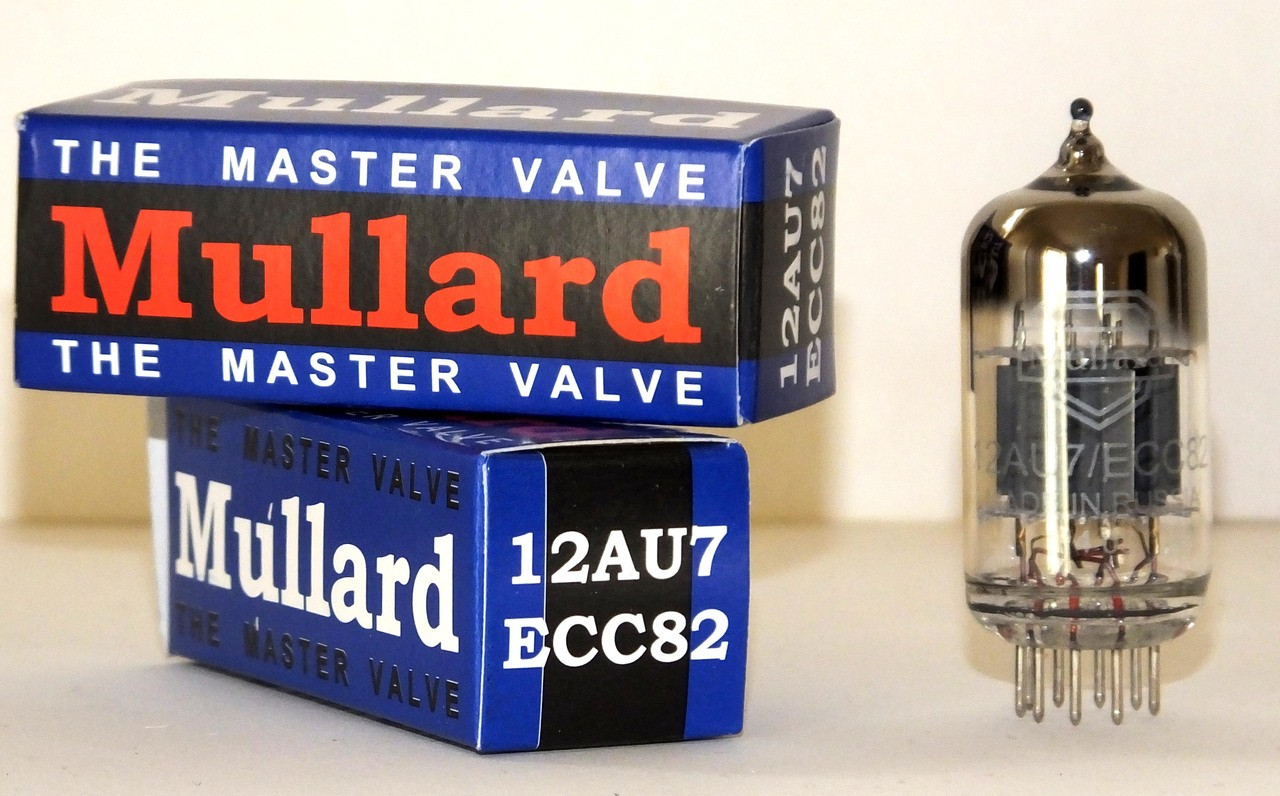
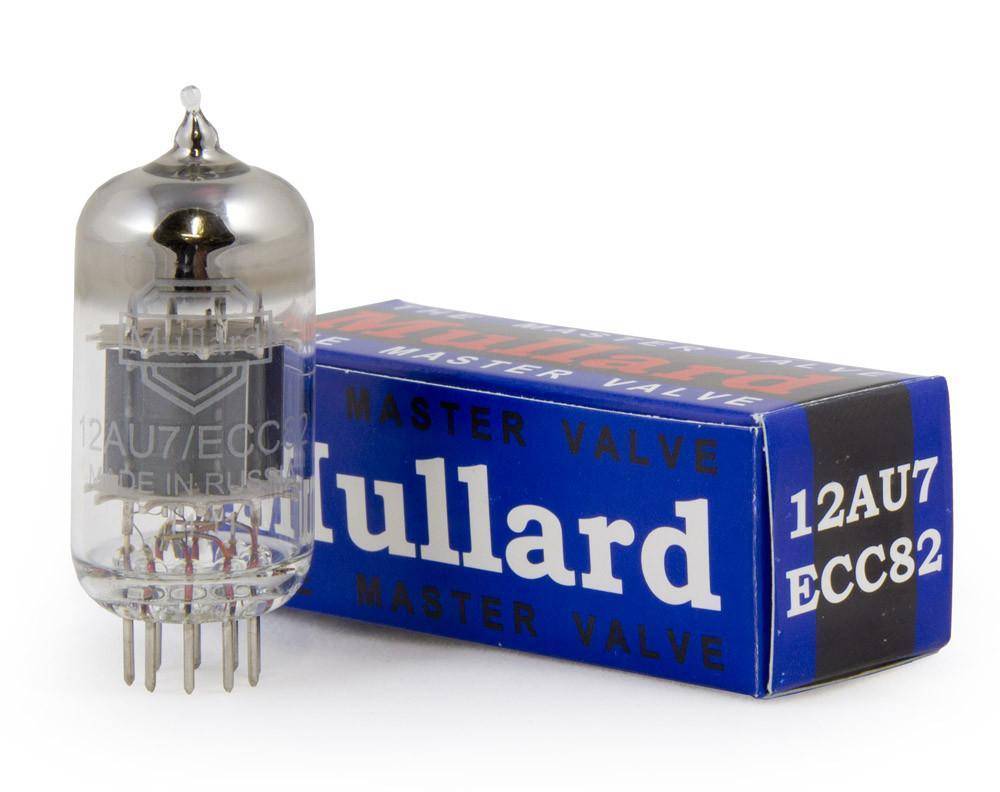
Matched pairs of Mullard Vacuum Tubes 12AU7 (2 units) and 12AX7 (2 units)

RM900.00

1. Mullard 12AU7 / ECC82

The 12AU7 is a medium-mu (gain) dual triode. In audiophile gear, it is rarely used for high-voltage gain; instead, it shines as a low-noise line amplifier, cathode follower, driver tube, or phase inverter because of its high current capability and low output impedance.

Wikipedia+ 1


Core Electrical Specifications (Per Section)

  • Amplification Factor (): 17 to 20

    The Valve Museum


  • Plate Resistance (): ~7,700 (at nominal operating points)

  • Transconductance (): 2,200 ()

  • Nominal Plate Current ():

  • Max. Plate Voltage (): 300 V

    Wikipedia


  • Max. Plate Dissipation (): 2.75 W

    Wikipedia


  • Grid Voltage (): -8.5 V (Nominal bias)

Filament / Heater Ratings

  • Series Wiring: 12.6 V @ 150 mA (Pins 4 and 5)

    Wikipedia


  • Parallel Wiring: 6.3 V @ 300 mA (Pins 4+5 tied, Pin 9 center tap)

Audiophile Design & Structural Variants

Vintage Mullards from the Blackburn factory (look for the “B” in the etched glass etched code) are prized for their incredibly rich mid-range and low microphonics.

  • Long Plates (17mm) vs. Short Plates (14mm): The 1950s “Long Plate” versions have a massive soundstage and deep low-end, but can be slightly more prone to microphonics in high-gain positions. The 1960s “Short Plate” versions are structurally stiffer, offering lower background noise and an incredibly punchy, ink-black quiet background.

  • CV491 / ECC802S: These are military/ruggedized premium versions of the Mullard 12AU7. They feature tighter factory matching between the two internal triodes and ultra-low noise floor, making them the holy grail for high-end preamps.

    Apos


2. Mullard 12AX7 / ECC83

The 12AX7 is a high-mu (gain) dual triode. This is the quintessential voltage-multiplication tube found in phono stages, line-stages, and the input positions () of power amplifiers.

Evatco


Core Electrical Specifications (Per Section)

  • Amplification Factor (): 100

  • Plate Resistance (): ~62,500

  • Transconductance (): 1,600 ()

  • Nominal Plate Current ():

  • Max. Plate Voltage (): 300 V

    Wikipedia


  • Max. Plate Dissipation (): 1.0 W

  • Grid Voltage (): -2.0 V

Filament / Heater Ratings

  • Series Wiring: 12.6 V @ 150 mA

    Wikipedia


  • Parallel Wiring: 6.3 V @ 300 mA

    Wikipedia


Audiophile Design & Structural Variants

Because the 12AX7 deals with ultra-low signals (especially in phono preamps), the structural era of the Mullard drastically changes the noise floor and presentation.

  • The “Mullard Warmth”: Structurally, vintage Mullard 12AX7s utilize heavily coated unipotential cathodes and a unique grid geometry that rolls off harsh, sterile high-frequency transients while emphasizing second-harmonic richness.

  • Mullard CV4004 / M8137: This is the box-plate, ultra-premium military variant. Instead of ladder or ribbed plates, it features a rigid “box” structure around the grid. For audiophiles, this tube offers the absolute lowest microphonics and the tightest imaging of any 12AX7 variant ever built.

  • 10M Series: Released by Mullard as a gold-standard consumer line, these guaranteed low noise and a 10,000-hour lifespan with gold pins to reduce contact resistance.
Quick Reference Comparison for Circuit Tuning

Specification Parameter 12AU7 / ECC82 (Medium-Mu) 12AX7 / ECC83 (High-Mu)
Voltage Gain () Low/Medium (17–20) High (100)
Current Capability High ( typical) Low ( typical)
Output Impedance Low (Better for driving long cables) High (Requires careful impedance matching)
Audiophile Application Buffer stages, Line preamps, Drivers Phono stages, Input voltage amplifiers
Classic Mullard Tone Deep, authoritative bass, liquid mids Holographic, warm mid-range, smooth top-end

Description

The 12AU7 is a medium-mu (gain) dual triode. In audiophile gear, it is rarely used for high-voltage gain; instead, it shines as a low-noise line amplifier, cathode follower, driver tube, or phase inverter because of its high current capability and low output impedance.

Core Electrical Specifications (Per Section)

  • Amplification Factor (): 17 to 20

  • Plate Resistance (): ~7,700 (at nominal operating points)

  • Transconductance (): 2,200 ()

  • Nominal Plate Current ():

  • Max. Plate Voltage (): 300 V

  • Max. Plate Dissipation (): 2.75 W

  • Grid Voltage (): -8.5 V (Nominal bias)

Filament / Heater Ratings

  • Series Wiring: 12.6 V @ 150 mA (Pins 4 and 5)

  • Parallel Wiring: 6.3 V @ 300 mA (Pins 4+5 tied, Pin 9 center tap)

Audiophile Design & Structural Variants

Vintage Mullards from the Blackburn factory (look for the “B” in the etched glass etched code) are prized for their incredibly rich mid-range and low microphonics.

  • Long Plates (17mm) vs. Short Plates (14mm): The 1950s “Long Plate” versions have a massive soundstage and deep low-end, but can be slightly more prone to microphonics in high-gain positions. The 1960s “Short Plate” versions are structurally stiffer, offering lower background noise and an incredibly punchy, ink-black quiet background.

  • CV491 / ECC802S: These are military/ruggedized premium versions of the Mullard 12AU7. They feature tighter factory matching between the two internal triodes and ultra-low noise floor, making them the holy grail for high-end preamps.

    Apos


 Mullard 12AX7 / ECC83

The 12AX7 is a high-mu (gain) dual triode. This is the quintessential voltage-multiplication tube found in phono stages, line-stages, and the input positions () of power amplifiers.


Core Electrical Specifications (Per Section)

  • Amplification Factor (): 100

  • Plate Resistance (): ~62,500

  • Transconductance (): 1,600 ()

  • Nominal Plate Current ():

  • Max. Plate Voltage (): 300 V

  • Max. Plate Dissipation (): 1.0 W

  • Grid Voltage (): -2.0 V

Filament / Heater Ratings

  • Series Wiring: 12.6 V @ 150 mA

  • Parallel Wiring: 6.3 V @ 300 mA

Audiophile Design & Structural Variants

Because the 12AX7 deals with ultra-low signals (especially in phono preamps), the structural era of the Mullard drastically changes the noise floor and presentation.

  • The “Mullard Warmth”: Structurally, vintage Mullard 12AX7s utilize heavily coated unipotential cathodes and a unique grid geometry that rolls off harsh, sterile high-frequency transients while emphasizing second-harmonic richness.

  • Mullard CV4004 / M8137: This is the box-plate, ultra-premium military variant. Instead of ladder or ribbed plates, it features a rigid “box” structure around the grid. For audiophiles, this tube offers the absolute lowest microphonics and the tightest imaging of any 12AX7 variant ever built.

  • 10M Series: Released by Mullard as a gold-standard consumer line, these guaranteed low noise and a 10,000-hour lifespan with gold pins to reduce contact resistance.
Quick Reference Comparison for Circuit Tuning

Specification Parameter 12AU7 / ECC82 (Medium-Mu) 12AX7 / ECC83 (High-Mu)
Voltage Gain () Low/Medium (17–20) High (100)
Current Capability High ( typical) Low ( typical)
Output Impedance Low (Better for driving long cables) High (Requires careful impedance matching)
Audiophile Application Buffer stages, Line preamps, Drivers Phono stages, Input voltage amplifiers
Classic Mullard Tone Deep, authoritative bass, liquid mids Holographic, warm mid-range, smooth top-end